
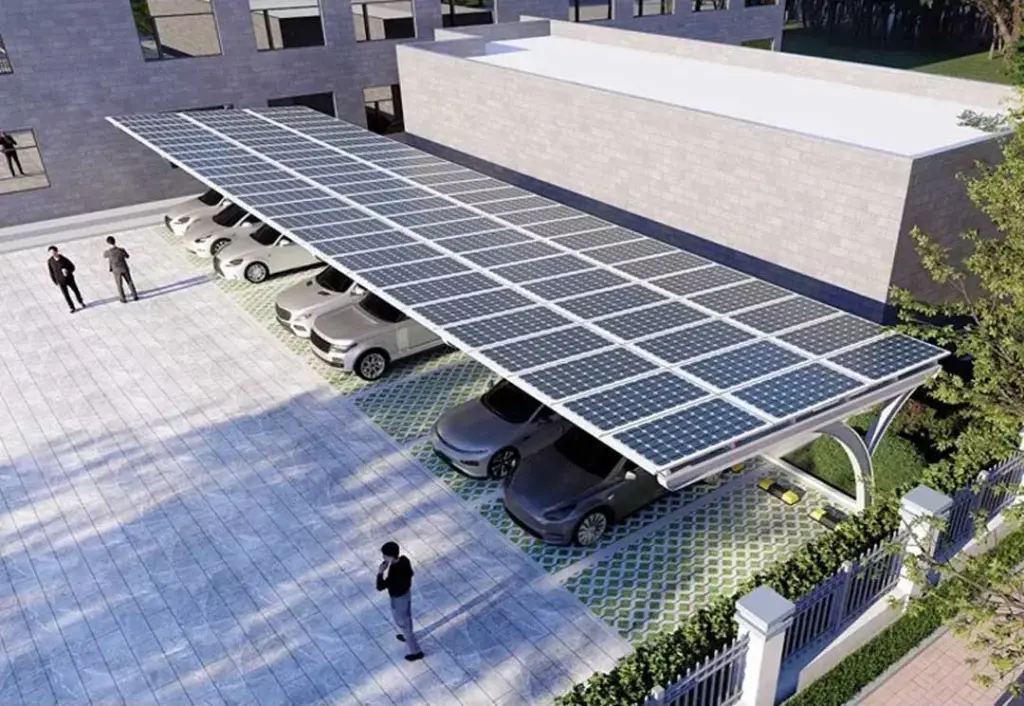
Can’t or don’t want to put panels on your roof? Learn how solar carports work, what they cost, and who they suit best.
Rooftop solar gets most of the attention, but it isn’t the only way to produce your own power. If your roof is shaded, old, awkwardly angled, or simply not an option, a solar panel carport may be worth a look.
What is a solar carport?
A solar carport is a freestanding structure with solar panels mounted overhead. It shelters your vehicles while generating electricity, so you get a parking cover and a power source in one installation.
Why homeowners consider them
- Roof limitations: Shade, a limited roof area, or a roof near the end of its life can make rooftop solar a poor fit.
- Better positioning: A carport can be placed and angled to catch more sunlight than a roof that faces the wrong way.
- Dual purpose: You get protection from sun, rain, and snow for your cars.
- EV-friendly: Charging an electric vehicle with power generated right above it is a natural pairing.
- Easier maintenance: Panels at a lower height are simpler to clean and inspect.
Things to consider
- Cost: A carport needs a structure and foundation, so it often costs more than a comparable rooftop system.
- Space and permits: You need adequate yard or driveway space, and local zoning and permit rules vary.
- Installation time: Building a structure can take longer than mounting panels on an existing roof.
- Incentives: Eligibility for tax credits, rebates, and net metering depends on your location and utility, and these programs can change.
Other rooftop alternatives to explore
If a carport doesn’t fit, ask installers about ground-mounted systems or community solar programs, where available.
How to decide
Start with a few questions. Is your roof suitable? Do you have open space? What is your budget? A solar calculator can help you estimate the system size you need before you request quotes.
Not sure which option fits your home? Enter your zip code to compare local solar providers and see what’s available near you.